
May 2026
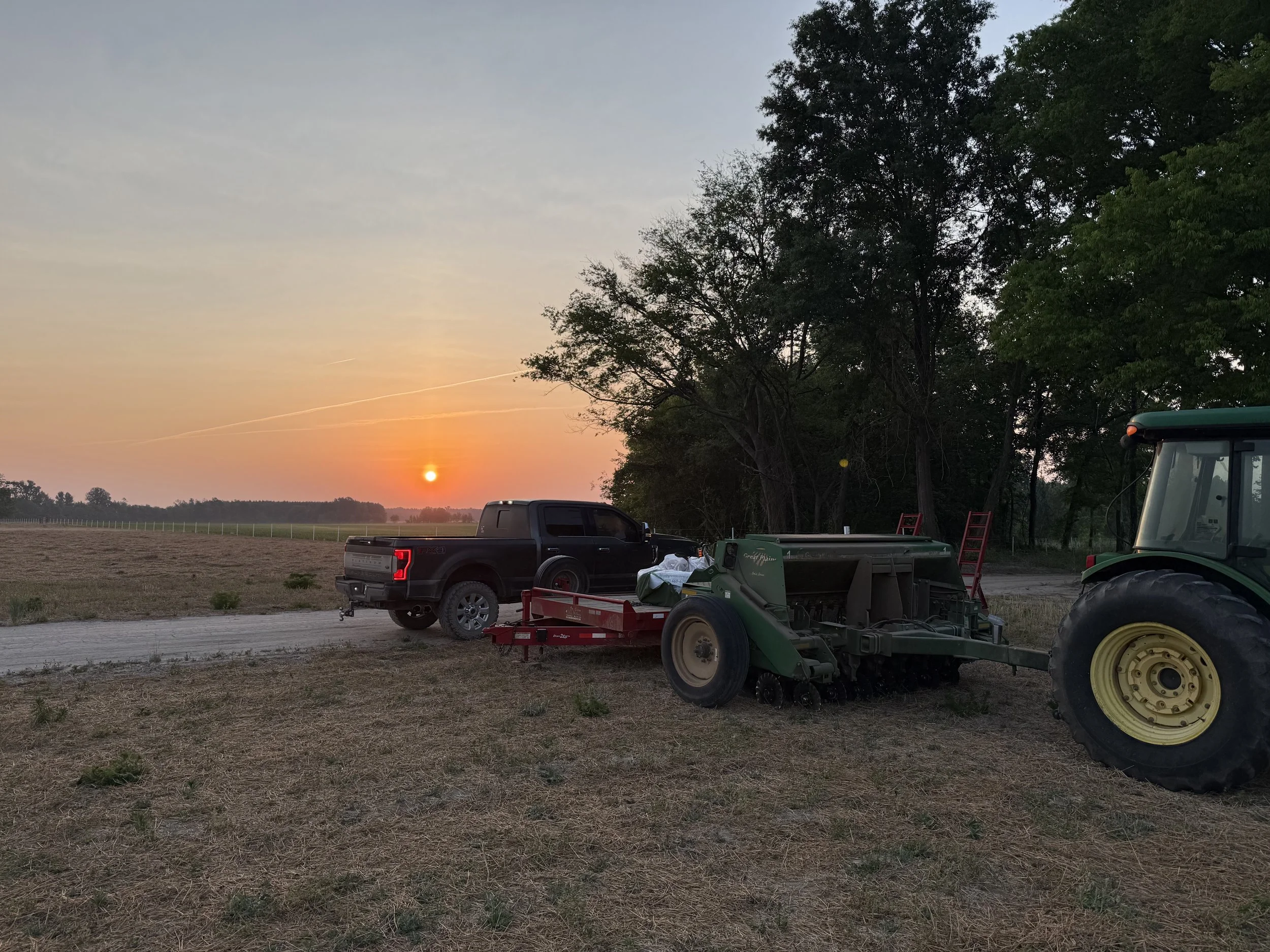
Can’t plant all day if you don’t start in the morning.
May 2nd brought the first true rain in weeks here in Clarendon County, and you should’ve seen me dancing. It could have been that we were at Birdfest, A bluegrass festival that is held not 3 miles from our fenceline, or the fact that the day before, we had finished planting our warm-season cover crop. Back in March, our tractor had to head into the shop for what we thought would be a straightforward repair, but it quickly turned out to be an expensive and long project that is still no closer to being completed. A friend, who also runs cattle, had a spare tractor that we were graciously able to borrow, and after some repairs to that fuel system, get a touch over 2,000lb of seed into the soil.
This mix is a blend of Buckwheat, Okra, Cowpeas, mungbeans, sunflowers, Turnips, Forage soybeans, Collards, and sorghum, and two types of millet, all planted along with BMR Dwarf Sorgum Sudan grass. The goal with this mix is to grow a ton of biomass, give the cattle a wide variety of nutrients throughout the grazing season, suppress any weeds that pop up, help cycle nutrients in the soil, and fix some nitrogen back into the soil. Given that we do not apply nitrogen or any synthetic soil amendments, we need to rely on our plant choices to help speed up our soil healing. Planting soybeans, collards, and mungbeans to fix nitrogen from the air; sorghum sudan grass and sunflowers for biomass that will help build that spongy topsoil as its grazed, trampled, and laid down by the cattle. Now all we needed was more rain.
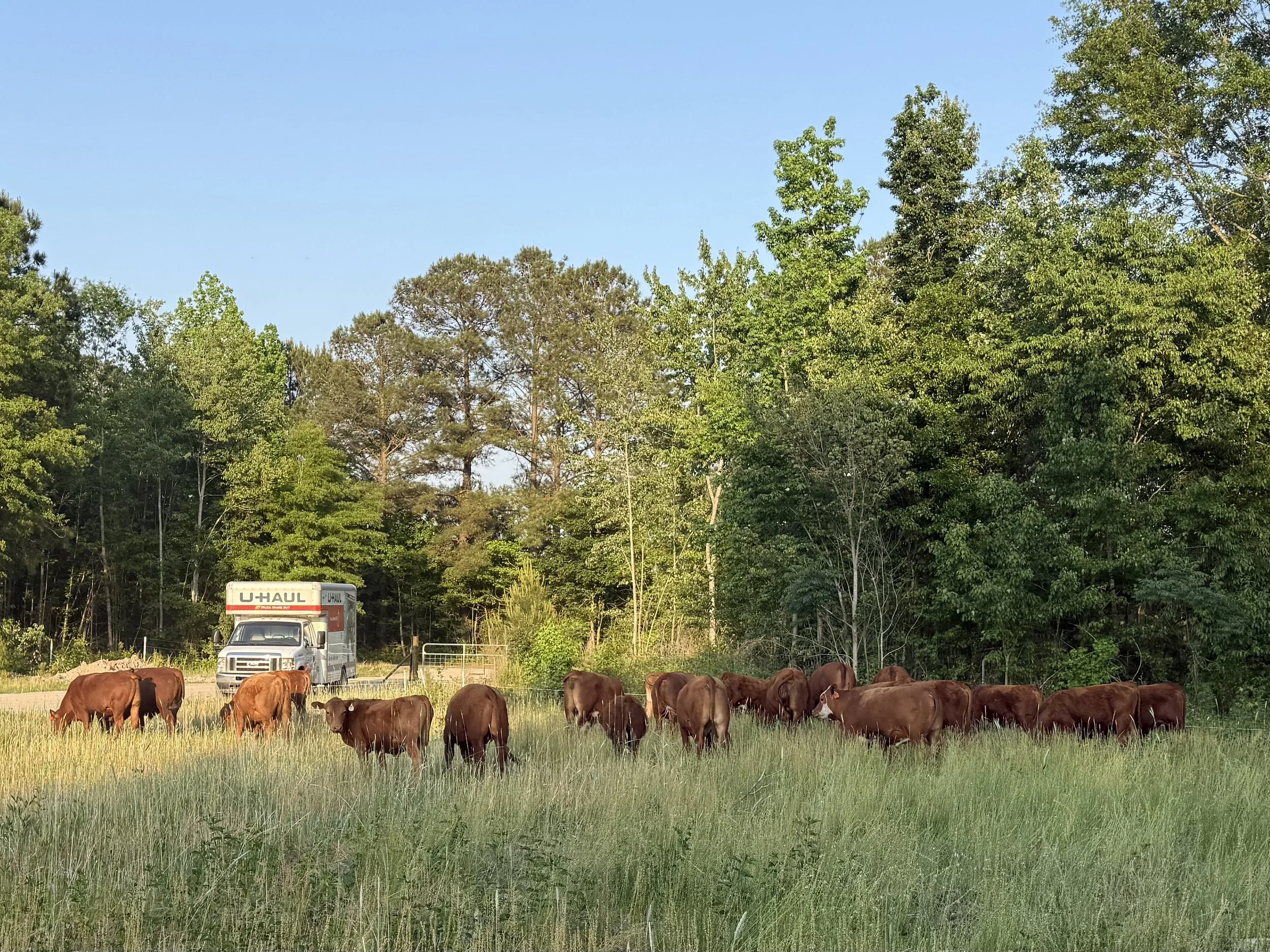
Getting the boys on some fresh forage mid move
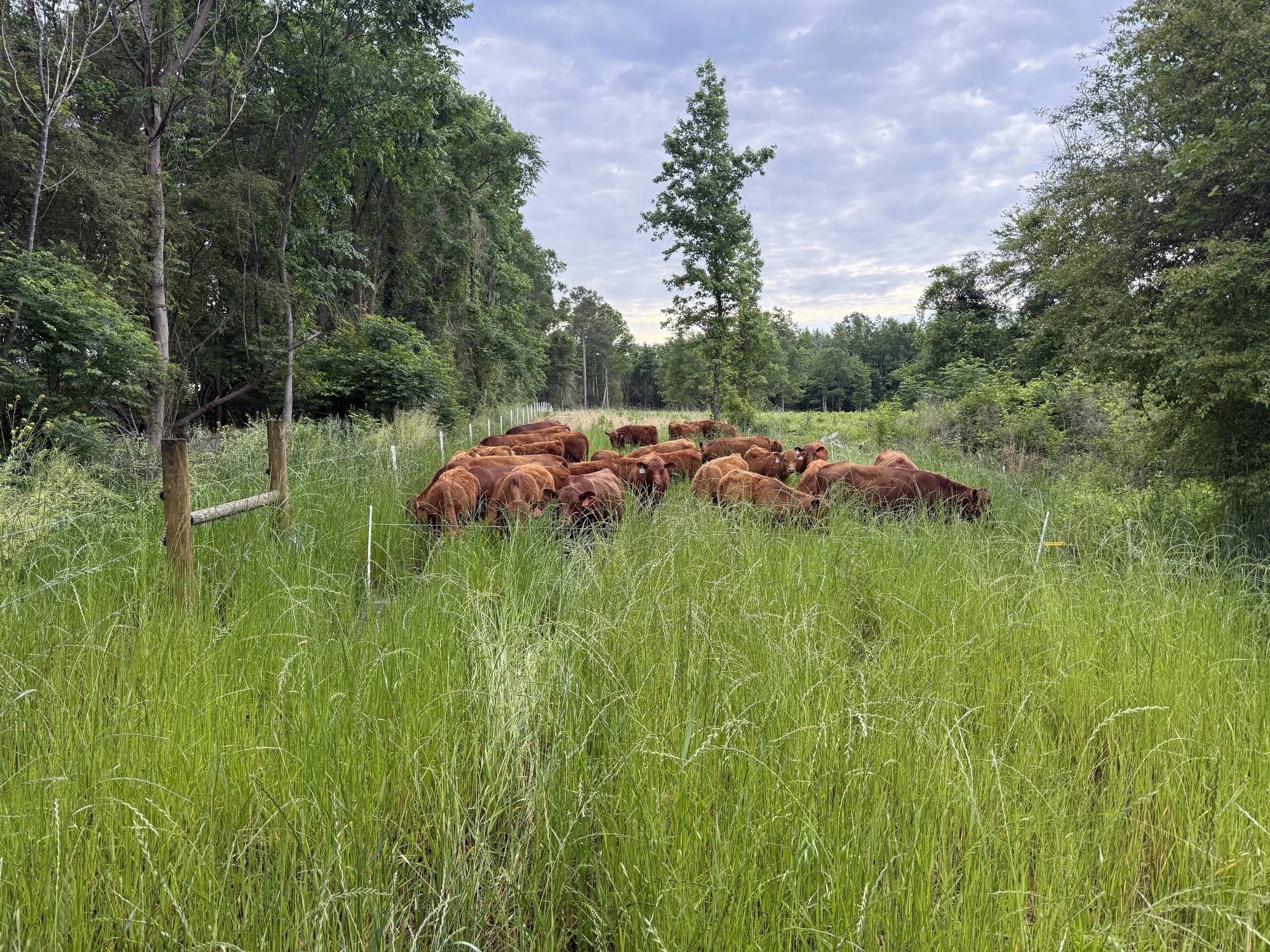
We got a bit through the month, but we are still in a whirlwind of a drought, down ~9” from where we should be by this time, marking one of the driest stretches in SC history in over 100 years. To combat this, we left several spots ungrazed on our first lap around “The 40” and started fencing them into the woods and more wild areas, supplementing with hay. I saw one of our bigger steers come into the new paddock, walk across the freshly unrolled hay, and start munching on a tender young vine that was about 5ft tall. I couldn't believe it. We are still waiting for our summer forage to jump so were still working slowly through the woods and edges of the pastures, trying to balance protecting our soil, growing the forage we will need, and keeping our steers growing.
Without the tractor or 4-wheeler, we've been doing a lot by hand and on foot. After a 3-month paperwork ordeal and 3-month renovation, we finally moved into our house! We live on a 55mph road, and the house had no fence, so we hand-dug all 72 holes, used 2 ratchet straps, a DIY fence stretcher, and my pickup, and built an impenetrable dog fence that I have to say looks great. Although setting up our temporary fence for the steers on the 4-wheeler is much faster, it has been a nice change of pace to walk. You get to see and hear much more, like the gobbler that outsmarted me early in turkey season still gobbling on the roost, reminding me that these are his woods, or one of the 2 male bobwhites we've heard whistle that he is single and ready to mingle. Grazing in the woods certainly doesn't beat nice lush pastures, but in a pinch, we're finding that it can really save you some hay. I’ll miss my morning walks once I'm able to replace the 4-wheeler, but I am sure ready to not hit my 10,000 steps a day by lunch.
I’m holding back plenty of info in an attempt to keep these posts to a 1-page read, but I'm happy to elaborate further in the future if folks want to hear more about what we have going on up here at our little slice of paradise. Y’all feel free to Email, call, text or drop by any time.
Y’all be good,
Hase
